Friday, July 18, 2014

On MH17, Blowback and the Future of Ukraine

When faced with an IR problem that "scares me," what is the appropriate response? No doubt, we badly want to go out there and "fix things," "bring evil-doers to justice" and "make right with the world." And without question, I am both infuriated and dispirited after witnessing 300 civilians casually murdered. Dear reader, you're not alone, I want something done too.

Nonetheless, reacting aggressively to perceived threats is very dangerous. This is something similar to the "compulsion to act," a terrible logical fallacy that comes up when faced with uncertainty and danger. The world is a scary place, and we would prefer to believe the lie that there's always something that "Obama can do" to fix it. Once again, look at "bring back our girls." What an awful situation. Wouldn't be nice if we could just ride in and fix it? We can save some lives and shoot some evil terrorists along the way! It'll be just like Kony2012 or Rambo 5. I get those two mixed up sometimes.

Obviously, we can't actually go out and fix things, not in the emotionally satisfying way that gives the world's John McCain's a hard-on (i.e. vaporizing brown kids). Overreaction is a much greater threat than under-reaction. 9/11 has proven costly not just because of the people lost that day, but because of the insane series of decisions that led to invading two countries, wasting trillions of dollars, sacrificing thousands of Americans, destabilizing vast portions of the globe, poisoning key alliances and ultimately accomplishing nothing of any meaning (aside from one dead Osama. Hurray!).

The Obama administration has learned this the hard way, after a series of humiliating foreign policy failures in the Middle East and South Asia. Invading Libya couldn't have gone worse, nor has the "Afghan surge" proven to magically build a democracy in Kabul. We bungled a response to the Arab spring and are now forced to ally with the leader of mass executions and religious suppression in Egypt. Even when we respond at the right moment, it's become painfully obvious that our choices and our realistic chances of success are extremely limited. To make matters worse, the ability to enact change in dangerous places is only becoming more rare as the dangers of asymmetric power steadily increase.

All of this is quite weird when discussing Russia, since this seemed to be the case of one of the few major powers that "got it." Throughout all of the build-up to Syria and nuclear negotiations with Iran, Russia emphasized the importance of international stability over idealism, of recognizing our limitations and the dire consequences of failure. They seemed to have learned this the hard way after having to level the North Caucasus on multiple occasions, only to see more terrorists, more violence and an even greater need to go back every few years. And yet, despite all of this hard-earned wisdom, the relentless urge to "do something" has backfired disastrously. Instead of stamping out right-wing extremism in Ukraine after Maidan and restoring East-West balance in Ukraine, they're looking at a horror show of blowback:
  1. They armed terrorists that killed 300 civilians (or alternatively Russian black ops mistakenly did it on their own. Even worse). On that plane were some of the leading AIDS researchers and activists. They've guaranteed that this regime will be permanently thought of in the same context as Qaddafi's. That ended well.
  2. They will face serious unrest back home for laying bare the emptiness of political ethno-nationalism. That racist frenzy they whipped up won't suddenly vanish after losing its convenience, and the threat of violence within Russia grows. Instead of containing their own Maidan, they've probably only made it more likely. Look how quickly they fell apart in Ukraine. How long will they hold up to real domestic pressure?
  3. Ukraine is irreversibly now on the path to the EU and NATO. Georgia too. While Russia was trying to expand their sphere of influence and solidify regional soft power, every one of their neighbors has learned the exact opposite lesson from this: you better be in NATO or nuclear armed if you want to avoid meddling. 
In almost every conceivable way, Russia has failed. Even worse, they had "victory" right after the annexation of Crimea, but the urge to act, hubris or some combination of the two found a way to crush them along the way. The message had become clear and decisive. Stir up anti-Russian hatred in some stupid exercise of "democracy"? We'll crack the whip, and you'll pay the consequences. Instead of coming off as brutal and forceful, Moscow is proving unable to contain the mess it put together. It's hard to see how this isn't going to get much worse for them before it gets better. How do you win Ukraine now? Invade?

As Americans, we should find it very distressing that the clinical case for overreaction is staring us in the face, yet we learning nothing from it. Everything about the last few weeks in Ukraine says "cool out" and "don't do anything stupid." But the voice of America, embodied so well by you cousin, is pleading for the exact opposite. Russia has failed! Let's fail even more spectacularly!

In the meantime, the intense urge to "roll the ball out" hides what has actually been accomplished. Little would most of us know, the Obama administration has led the most aggressive response to Russian fiddling in Ukraine. Sure, sanctions don't play well on Fox News (only McCain boners there), but it looks like they've worked pretty well. The US government is now targeting Russian banks and energy companies, and the EU pushed through tougher sanctions on the day before plane was shot out of the sky. You now have the unfathomable occurrence of a Dutch Prime Minister vowing revenge. You think things are going to end well for Russia?

It's time like these that lead me to a much more reflective mood, resembling the ideology of Carl Sagan's pale blue dot. Looking at the Earth on a global or, even better, a universal scale is deeply humbling. It's a reminder of how small we are, how short our lives are and how limited we can be in trying to force through change during emotional moments. It's a reminder of the slower changes and greater challenges we face as a species, those true existential threats that are entirely divorced from the day-to-day chatter of the news media.

This is an awful tragedy. Everyone should be shocked, horrified and saddened by what has just happened. There will likely be even greater ramifications from all of this. More blood will be spilled in Ukraine. But moments like these also indicate a turning of the tide. As Dr. King reiterated, "nights are always darkest before the dawn." Everything is finally pointing towards a concerted Western response to end this issue; one that doesn't require Obama becoming a "decider" or impossible fantasies of unity within our broken political system. Diplomacy will eventually work, and it will save us from the even greater dangerously of overreaction.

Wednesday, June 18, 2014

A Stunt, a Spoof, and a Lesson on Racism

Joe Scanlan is marginally known in the art world for his obviously racist stunts where he either performs under the guise of a black man or has black actors perform his art for him. Justin Wong decided to take this charade even further and satire the absurd exercise by "creating" Joe Scanlan as a version of himself. This is a satire, and it is a brilliantly incisive take on the politics of "dressing up." As he writes,
The idea for Joe Scanlan came a few years ago when I became interested in the presence of straight white men within the art world. In so many other realms straight white men are deprived of social and political ‘authenticity’: look at the white appropriation of black music from blues to hip hop, the white idolization of black athletes, or the apotheosis of white politics (Bill Clinton) resting in black folksiness. In the art world, however, the discourse around art produced by straight white men often casts them as singular and generative geniuses.
This struck me as a curiosity. I wondered what it would be like to create a figure that, through a practice of what I’d like to term “willful white male idiocy,” could not only point to, but also test the limits of and explode the boundaries of straight white male positionality within the art world. Could such a project, were it successful, help to undo some of the myth of the white male genius (and its corollary: the ghettoized queer, female, poor, colored “political” artist) we have inherited from European modernism?
The idea of "willful idiocy" is especially illuminating here, and it's not a concept I had a term for before reading this article. This is probably best encapsulated by occurrences where someone acts in a racist manor or brings up a racist comment while explicitly denying that their behavior is racist. By at least playing up this factor in Scanlan, Wong has hit at one of the most bizarre yet prevalent aspects of the current American conversation surrounding race.

For example, it's not uncommon to hear liberal people saying the problem with black America is "single mothers" or talking in panicked terms about the coming "white minority." Or trying to dredge up the old straw man of "black racism." They say on one hand that they want to see black people succeed (or oppose "racism") all while blaming something endemic to black people for dysfunction in their community (or pretending that "racism" has white and black victims). You see this thing happen all the time. Even Jonathan Chait kept repeating these lies during a recent debate on race.

As Ta Nehisi Coates always emphasizes, the problem is not poverty, or marriage, or even bigotry, the problem is white supremacy. Everything else is a distraction from that crucially important fact.

The importance of Joe Scanlan is multiple and tied fundamentally to a concept of erasure. White people are terrified of being accused of being a racist, because they equate racism with a certain uncultured bigotry that's no longer acceptable. Think Cliven Bundy. But this hysterical attitude towards "racism" actually serves racist ends. It makes the conversation about individuals' behavior instead of social hierarchy, even though the latter is the real problem.

Race and bigotry were invented to justify exploiting an entire class of Americans. That exploitation has not stopped, and little effort has been spent to solve it. In fact, by "erasing" bigotry, we've spent a lot of the capital needed to address hierarchy while making it nearly impossible to acknowledge how our attitudes and assumptions perpetuate the real problem. Like it or not, as white Americans, we are all racist.

So it's not just Justin Wong, Scanlan's "creator" and author of this article. We are all Joe Scanlan in the ways we (un)consciously reinforce American white supremacy. Solving this problem starts with acknowledging that fact and investigating our own history. We say and do racist things, we benefit from racial exploitation, and we owe it to ourselves to admit that. Only then can we see through the caricatures and fictions of racism in America and gain a true appreciation for what it means to be American.

Friday, June 13, 2014

The Scientific Process and the Global Warming Debate

An article on Bill Moyers's website recently featured a brilliant interview on how our limited understanding of the scientific process influences our debate about issues like Global Warming. To quote climate scientist Michael Mann, as told by Joshua Holland,
Too often we allow the forces of anti-science, the forces of denialism, or contrarianism, to somehow frame their position as one of skepticism. But denying mainstream, well-established science based on arguments that don’t stand up scrutiny, that’s not skepticism. That’s pseudo-skepticism.
Real scientists embrace skepticism because that’s what moves science forward. That’s the self-correcting machinery, to use the language of Carl Sagan, which keeps science on this inexorable course toward a better understanding of the way the world works. If your ideas are wrong, if your theories are wrong, if they don’t hold up, if the data don’t support them, if other studies don’t come to the same conclusion, then science moves on, and it searches for a better answer. Scientists are always trying to find holes in each other’s proposed ideas, or in their own proposed ideas.
To belabor the point a little bit, Climate-change deniers are not skeptics in the true sense. They instead enter the debate with a preset agenda and cling fiercely to a limited amount of information in order to make their case. That's ideology at work.

When someone says "I'm waiting for better science," they often imply that their point of view would have to disappear from the scientific literature before they agree with the consensus. But that's not how science works. Since scientists are skeptical and contrarian by nature, you will always find literature that attacks the accepted framework of climate. This is their job, and it is how they build a professional reputation.

No paper is definitive. Each new publication part of a large, slow-moving debate that has many facets. Picking out a single paper (or even a small number) is like listening to only one debater. That's never how you reach the truth.

Actually assessing the literature is hard, because it is the work of thousands of different people. This is why major scientific bodies only do big reviews once every few years. The arguments need time to develop. Research needs to be reproduced so it can be confirmed or denied.

This is why the statements of big reviews matter. And this is why scientific consensus is so important. When the UN panel says it has reached an overwhelming consensus on climate change, it means that this is the irrefutable conclusion after working through thousands of papers. It's basically impossible to read the extent of the literature and honestly believe something else. At that point, if you are still denying climate change, its source and its risk, you are denying reality. You have no justification other ideology. You are wrong and behaving very dangerously, because denying reality has dire consequences.

Friday, May 2, 2014

What Do We Make Of American Racism After Donald Sterling?

The Donald Sterling spectacle and his ultimate removal from the NBA has sparked a very disappointing by illustrative conservative backlash. The Washington Times trying to deflect by focusing on Larry Johnson is a typical response. In doing so, they bring out the hoary trope of "black racism," a lurking threat that has never actually materialized in the last 300 years. 

First things first, "black racism" is one of the most awful terms from the history of US race relations. White victim-hood, in particular, is a really challenging topic as it has often been used to justify some of the most horrendous acts of violence we've ever seen. Lynchings, for example, were justified because they protected the "purity of the white race" against miscegenation. In more recent debates, the concept gets trotted out to dismantle affirmative action or policies aimed towards reparations. The Atlantic has a very instructive history of the term in that context. To quote Stanley Fish,
What I want to say, following Bush's reasoning, is that a similar forgetting of history has in recent years allowed some people to argue, and argue persuasively, that affirmative action is reverse racism. The very phrase Reverse Racism contains the argument in exactly the form to which Bush objected: In this country whites once set themselves apart from blacks and claimed privileges for themselves while denying them to others. Now, on the basis of race, blacks are claiming special status and reserving for themselves privileges they deny to others. Isn't one as bad as the other? The answer is no. One can see why by imagining that it is not 1993 but 1955, and that we are in a town in the South with two more or less distinct communities, one white and one black. No doubt each community would have a ready store of dismissive epithets, ridiculing stories, self-serving folk myths, and expressions of plain hatred, all directed at the other community, and all based in racial hostility. Yet to regard their respective racisms--if that is the word--as equivalent would be bizarre, for the hostility of one group stems not from any wrong done to it but from its wish to protect its ability to deprive citizens of their voting rights, to limit access to educational institutions, to prevent entry into the economy except at the lowest and most menial levels, and to force members of the stigmatized group to ride in the back of the bus. The hostility of the other group is the result of these actions, and whereas hostility and racial anger are unhappy facts wherever they are found, a distinction must surely be made between the ideological hostility of the oppressors and the experience-based hostility of those who have been oppressed.
Not to make that distinction is, adapting George Bush's words, to twist history and forget the terrible plight of African-Americans in the more than 200 years of this country's existence. Moreover, to equate the efforts to remedy that plight with the actions that produced it is to twist history even further. Those efforts, designed to redress the imbalances caused by long-standing discrimination, are called affirmative action; to argue that affirmative action, which gives preferential treatment to disadvantaged minorities as part of a plan to achieve social equality, is no different from the policies that created the disadvantages in the first place is a travesty of reasoning. Reverse Racism is a cogent description of affirmative action only if one considers the cancer of racism to be morally and medically indistinguishable from the therapy we apply to it. A cancer is an invasion of the body's equilibrium, and so is chemotherapy; but we do not decline to fight the disease because the medicine we employ is also disruptive of normal functioning. Strong illness, strong remedy: the formula is as appropriate to the health of the body politic as it is to that of the body proper.
Even without the disgusting historical record, the image of a black racist is dangerous because it plays up a false equivalence. Racism is a lot more than just "mean things said by this guy." This is a mistake that many (Conservative) white people make. They believe that racism is what happens when people say mean things to you because of your race. You are "hated" for being white. It helps that most "racism" scandals in the US, like Donald Sterling's, are reduced to this definition. This definition is behind a lot of the crazy beliefs like "white people are greater victims of racism than black people." A majority of white Americans actually believe this.

I would say a better and more fundamental definition is this: Racism is things actually happening to you because of your race. 50 years ago, that means lynching, beatings, getting slowly but surely robbed by racist property owners, employers and financial institutions. Even if a lot of those things don't happen any more, there are continuing effects from this kind of racism.

For example, you can't explain the existence of ghettos without white violence. As black people migrated to Northern cities at the beginning of the 20th century, they were certain to have their property destroyed, if not be killed, if they didn't live in the poorest most crime ridden neighborhoods of the cities. When they didn't, riots happened. Up until the 50s, you could expect one every couple of years. The Cicero Riots, for example, were an international scandal. Today, they're hardly even remembered. But their effects still reverberate in segregated neighborhoods and racially-limited options for getting a mortgage.

Black poverty, urban crime, diminished educational expectations and terrible health outcomes all have some thread dating back to the Jim Crow South or Northern Apartheid. Despite all of our best intentions, those evils of the first half of the twentieth century are institutionalized and do not go away easily. I think it would be very strange to believe otherwise, especially looking at data of racial attainment, and witnessing the huge lag for African Americans in every social sphere.

Today, the racism that I'm talking about is mass incarceration. Black people are 30 percent of the population and 60 percent of the prisoners. Today, there is no doubt about widespread bias in treatment from recruiters, doctors, teachers and schools. Looking at CEO's, top managers, politicians and leaders in almost every sphere, it's hard to deny the huge professional achievement gap. And most obviously, you cannot talk about persistent income and wealth inequality in US without taking race into account too.

Both races experience the first kind of racism I described above. But whites do not experience the latter. That's why I think it's more appropriate to call the latter "real racism." If someone says a mean thing to you, tough shit. Or if they say they hate you because of your race, you won't experience material harm.

Either way, it's not nearly equivalent to being slammed up against the wall in New York because the explicit policy of the police department is to harass people of your race. Or having every basic civil right stripped from you by a racist drug war. Or struggling to get by when you are stuck in segregated schools and broken neighborhoods. There's a whole different scale here.

Going back to The Washington Times, you start to get a real picture of the problem when they try to cast Larry Johnson as a "black racist."
  • Johnson is talking about black ownership in a country that has intentionally limited black wealth for almost all of its history.
  • Sterling has a much broader history of harmful racist behavior, and this is more important than words.
  • The concept of "black racism" tries to mix up the two kinds of racism I described. The Washington Times is trying to make people believe that the "real" racism of social discrimination and mass incarceration isn't nearly as terrible as it is in reality. This is part of a conservative political agenda.
A thought experiment might help here too. Ask yourself whose racism is worse: Mayor Bloomberg or Cliven Bundy.

Now, Cliven Bundy has some really abhorrent views of African Americans and has said some really terrible things about them. It's further evidence that any story starting with "Let me tell you something about the Negro" is bound to end badly. Mayor Bloomberg has never done anything like that. In fact, it would be hard to find any evidence of Bloomberg's " ignorant belief of ones superiority i.e..skin color, religion, sexual preferences," to use a common (white) definition of racism.

But Bundy, even though he said racist things and has seemingly racist beliefs, has never caused the harm to African Americans in any meaningful sense. On the other hand, Bloomberg is the chief advocate of Stop and Frisk, a program that has been devastating to the African American community in New York. We're talking about thousands, if not tens of thousands, of lives ruined by absurd drug sweeps and racist targeting. If you make someone a drug felon after busting them with a dime bag, their life is ruined. And it is revolting to think that someone would want this to happen over and over, but that's exactly the result that Bloomberg was looking for.

As Jamelle Bouie writes, only Bloomberg's racism really matters to the well-being of actual people. And that's what makes it so insidious. Not only it is less visible, it is far more damaging.
When it comes to open bigotry, everyone is an anti-racist. The same Republicans who question the Civil Rights Act and oppose race-conscious policy are on the front lines when it’s time to denounce the outlandish racism of the day. “I wholeheartedly disagree with him,” said Kentucky Sen. Rand Paul in response to Cliven Bundy’s digression on “the Negro.” Sean Hannity, the Fox News personality who championed Bundy’s cause of free grazing rights, blasted Bundy for his “ignorant, racist, repugnant, despicable” comments.
Indeed, the mere hint of racial insensitivity is enough to bring the hammer down, as we rush to refute and repudiate the transgressor. This can go too far—see the most recent controversy over Donald Rumsfeld—but it’s an understandable impulse, and on the whole, a good one.
At the same time, we all but ignore the other dimension of racism—the policies and procedures that sustain our system of racial inequality. The outrage that comes when a state representative says something stupid about professional basketball players is absent when we learn that black children are punished at dramatically higher rates than their white peers, even as preschoolers. Likewise, it’s absent when we learn that banks targeted minorities—regardless of income—for the worst possible mortgage loans, destroying their wealth in the process.
In turn, this blinds us to the racial implications of actions that seem colorblind. In a world where racism looks like cartoonish bigotry, it’s hard to build broad outrage for unfair voter identification laws or huge disparities in health care access.
Conservatives prefer to talk about individuals. It's politically convenient. Under their rubric, "racism" is going away because open bigots are now rare and can be found among all races. And while "racists" can be punished, doing anything about real racial injustice would be considered "government overreach." Obviously, the Washington Times doesn't want something like this, so they make cartoonish bigotry seem ubiquitous (or at least equally distributed), although real harm is exclusively concentrated among one group.

But therein lies the rub. Racism matters when it hurts people, as when a slumlord robs his tenants for decades because they're black and easily exploited. You have to fix it with laws. And that's hard. It's easy to condemn Cliven Bundy's or Larry Johnson's racist words. It's much more important to do something about Bloomberg's or Sterling's. That's why the latter is "real" and important, while the former is just a distraction. And in the end, understanding this tricky distinction is the heart of the debate for real reparations

Friday, February 21, 2014

What the Hell Is Happening In Ukraine?

I have some friends in Ukraine who might disagree with me on this, and I have other Eurasian expert friends who are better at this than me, but here's the gist of my impression of this:

1) The events in Ukraine are related to a very long political struggle about the future regional direction of the country. The struggle has been flaring up ever since the Orange Revolution 2004. But its roots stretch back hundreds of years, connecting to the fights between the Russian, Ottoman and Holy Roman Empires for control of the region.

Catholic Ukrainian speakers in the West feel closer to Poland, Lithuania and the rest of Europe. Orthodox Russian speakers in the East, along with people strongly affiliated with the USSR (like the Tatars in the South), obviously want strong ties to Russia.

There are lots of fun ways to visualize these challenges. WaPo shows some of these maps here, along with a good explanation of the situation.

While the challenges are not necessarily historically determined, there are obvious historical trends at play. Kiev is the ancient home of the Russian people, but the Ukraine has always been a battle ground between Turks, Slavs and Catholics. These historical tensions are reflected in the country's current political challenges.

2) Ukraine is a mess economically and the government is corrupt and ineffective. The latter isn't necessarily new to the region (KZ is no different), but the citizens of post-Soviet states are more tolerant of the BS and the bribes when everyone is seeing some sort of progress. In that way, they're no different than the citizens of Western countries, who's citizens tend to ignore government failings when times are good, but they get a little crazier during economic struggles (enter Tea Party).

Ukraine is essentially broke and owes a lot of money to all of the usual international institutions. The most important issue in Ukraine right now is finding some way to get economic growth. This frame needs to be placed on any other discussion of the crisis.

3) The EU started this mess. You don't need to mince words. Politics in Ukraine is about balancing the aspirations of both the East and West of the country. The EU threw a bad trade deal at Ukraine that would have been harmful economically in the short term (subjecting them to IMF austerity terms) while waving a giant middle finger at the East who still wants strong ties with Russia. It would have been crippling politically for Yanukovich and the interests he represents. He had to turn it down.

Worse, Ukraine was expected to get take on very harsh terms for what was barely better than nothing from the EU. They continue on their "way" to trade integration, but they got nothing in the line of things like immigration rights. The Spectator sums it up well.
In spite of stringing Kiev along with pretty words about a European future, the EU could offer only $800 million , via the IMF, and that came at the price of exceptionally painfully economic reforms. Ukraine would have been subjected to the same devastation of its agriculture, on which it depends, as Romania and Bulgaria were in their pre-accession period. Its industry would have collapsed as well. Russia, by contrast, has been able to offer nearly 20 times this sum in loans to prevent Ukraine from becoming insolvent, and it is the biggest market for Ukrainian exports – bigger than the whole of the EU put together.
Which deal would you choose? The EU probably recognized this too, which is why they played their trump card. By creating a crisis (calling off all EU integration talks in one fell swoop), they can hope to force Yanukovich out of power undemocratically, putting in the other, more favorable part of the elite. Not surprising, the EU is now forcing sanctions on Ukraine, furthering the crisis.

4) During calm moments, the people in the streets are largely average Western Ukrainians who hope that some sort of European integration will reduce the corruption, impotency and insanity of the Ukrainian political system. Honestly, it's a little naive, but their intentions (liberal, transparent, just) are good.

But the real power behind the protest is a bunch of extreme right neo-Nazi parties. The Russian press has covered this well, and these groups are quite prominent in Ukraine, going by names like Far Right Sector and Trident. Russia tends to throw around this term a little too liberally (since this is ultimately the conflict that defines modern Russia), but it is mostly apt here.

Svoboda (the right political party that is the most moderate of the groups involved and actually has ministers in Parliament) marched around new year celebrating a Ukrainian nationalist leader that fought along side the Nazis against the Soviets. This is pretty typical of the group; their former name is the “Social-National Party of Ukraine” (ring a bell?). You hear lots of nationalist chants in the squares, along with insults about how the current government consists of "Jews."

To be fair, racist thugs are being employed by the government to counter the protests too. (The Berkut has pep talks where it calls the protesters a bunch of Jews). But it's important to remember that either side would act appallingly regardless of who was in political power.

5) Yulia Tymoshenko was just released from jail, which should make the lead up to the snap elections really nuts. Like everyone else in Ukrainian politics, she's corrupt and her party was pretty terrible while in government. But she is an obvious unifying figurehead for the movement (more than Klitschko or any of the other politicians in "talks"), and she is certainly liked by the West. We'll get to watch her propped up on a pedestal for awhile even though she's incredibly unpopular back home. It's not a coincidence that essentially no one was actually protesting in favor of her release.

6) Most importantly, keep in mind that the West always has an axe to grind with Russia. Egypt, despite the deaths of hundreds and an actual military coup, is getting more than a billion dollars in military aid from the US. Ukraine, which more than anything just needs some money, is facing sanctions because less than 50 people have died in a political struggle. The hypocrisy and the extreme prejudice are appalling.

The West owes an incredible gratitude to Putin for his pivotal role in stabilizing several political crises over the last few years (Iran and Syria are largely Russian diplomacy efforts). There is a lot to dislike about his politics, but there's a lot to dislike about the politics of any country. We can call Russia corrupt and homophobic, but US politics aren't corrupt? The US isn't homophobic? People really need to stop fighting the Cold War and start looking at the world with a little sense of rationalism.

Similar things can be said about Yanukovich. He is legitimately and democratically elected. We can debate the effects of the centralization of powers under his control, but it is maddening that Western governments are forcing street diplomacy onto Ukraine because they do not like his politics. It is a huge disservice to Ukrainians, who deserve better than to be trapped in the middle of an East-West pissing contest.

7) One of the many paradoxes of the Maidan revolution is the status of Yanukovych. On the one hand, this man is a clown. He was always bad for Ukraine, and he made it worst during his presidency. He deserves almost everything that has happened to him over the last few months. The nearly universal hatred is well deserved.

While he talks about the fascists in the square, it's an unavoidable fact that he is primarily responsible for his ouster. A savvier politician wouldn't have passed the anti-protest laws that got everyone to the street; a better human being wouldn't have had snipers shoot civilians. And yet, despite all of this, Ukraine is worse off for the way that it got rid of him. The Maidan did serious damage to long-term democratic stability. Even if this crisis is resolved soon (and armed seizures of airports in Crimea show that this is only the beginning), this armed revolt have negative effects for many years.

8) Ultimately, recent events nail home a very under-appreciated aspect of Russia's foreign policy: the premium placed on stability. For very good reasons, Russians hate political and social upheaval. They can easily describe the huge human cost of various revolutions.

Most Americans, while perhaps possessing the more justifiable ideals than Putin's Russia, have no sense of proportion, restraint or humility in international affairs. We naively celebrate the fall of tyrants, and cheer on demonstrations for "democracy and freedom." When these situations become chaotic and people starting dying, we shrug our shoulders and foolishly blame "national character" or "lack of civilization" for the obvious effects of our own efforts at destabilization.

I hope for the best in Ukraine, but this is the second time in 10 years that the street has settled political problems. I can't see how this bodes well in the future. In Kyrgyzstan, another fractious Post-Soviet, each successive revolution has been more violent than the last. The negative effects of the instability linger, and you end up with pogroms against ethnic minorities.

I'm sure there are reasons to celebrate the fall of a thoroughly corrupt politician with authoritarian tendencies. But at the same time, I mourn for those people (half the country!) who supported and organized behind him. Russian-speakers should have little faith in the future of democratic Ukraine, as this is the second time that Westerners have overthrown a man that they worked to elect. Where do you go from here?

Wednesday, February 5, 2014

Almost Everything Jeff Dorfman Says About the Minimum Wage is False

The State of the Union has once again brought up the minimum wage, and the endless debate between economists came back as well. A perfect example this is an article on the minimum wage from Jeff Dorfman, a "professor at the University of Georgia [and] libertarian." Although it should be enough to see the bias from someone who wrote a book against the welfare state publishing an article in Forbes, we can dig into the issue too. For anyone that wants to follow along, here's the OP. It's pretty standard stuff, which makes it a good target.
The Democrats, their union supporters, and liberals in general are making a hard and concerted push for an increase in the minimum wage. President Obama mentioned the subject prominently in his State of the Union address on Tuesday night and even promised to take executive action to increase the minimum wage federal contractors must pay their workers starting in 2015. While Republicans and small business owners are sure to resist this push, it is important that everyone on both sides debates the issue with the correct facts. Much of what you hear about the minimum wage is completely untrue.
Dorfman's article rests on three basic points, we can refute each separately.

1) "First, people should acknowledge that this rather heated policy discussion is over a very small group of people." Statistics don't lie, but you can lie with statistics. Dorfman is inching awfully close to the latter. His definition of low wage people concern only those people making less than 9 dollars an hour. Since most proposals to raise the minimum wage are looking at something from 10-12 dollars an hour, this is a bad arbitrary cut off.

His argument has a lot of this sort of "fuzzy math," which rests mostly upon the reader being lazy or intimidated by numbers. For example, Dorfman writes, "this group of workers is also shrinking. In 1980, 15 percent of hourly workers earned the minimum wage. Today that share is down to only 4.7 percent." This statistic only makes sense if the value of the wage was constant since 1980, which it has not been.


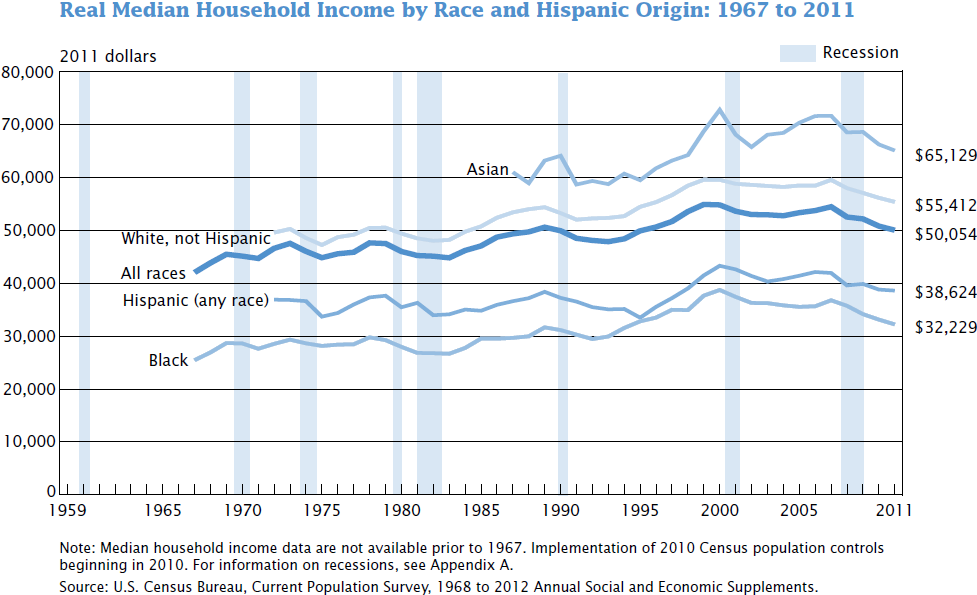
It was closer to 10 dollars back then (in current currency), and a whopping 30 percent of workers earn about that much or less in today's terms (15,000 dollars or less in annual terms). Looking more closely at the data, clearly Dorfman missed something (probably it was intentional). The liberal side of the argument says that the effects occur on a much broader scale. The Brookings Institute (which is itself not all that liberal) estimates that about 35 million workers would benefit from a minimum wage increase. That's about 30 percent of the workforce, and it's not far off from what the SSA says for earners in the economy.

That's a lot of people getting a raise! And a lot of them will be seeing their salaries increase indirectly. They might make slightly about the new minimum wage, but they'll get a raise anyway. The mechanics of this can be technical from an economic perspective, but the behavioral theory on it is quite nice. It comes from anchoring. People often set their wages in relation to a strong data point, and the minimum wage serves that standard. If the minimum wage goes up, there is strong psychological pressure to raise other wages.

2) "I want to bust one more myth about the minimum wage: the relationship over time between the minimum wage and labor productivity." For the most part in this section, Dorfman is right. The $22 minimum wage report that he references is terrible. It benefits his argument to talk about a terrible report, to make "liberals" seem "out of touch."

I don't support a 22 dollar an hour minimum wage for all of the suppply-side problems that Dorfman is concerned about. But that's a lot different that a 12 dollar an hour minimum wage, indexed to inflation (which is as liberal as any Congressional plan on this issue gets). The US already has the third lowest minimum wage, when compared to other OECD countries, so there is little doubt that we could increase it without large negative consequences.

Even more importantly, as Dorfman roughly gets right, total compensation and productivity are not actually all that different in the US. And the "huge gap" that people reference in the productivity numbers definitely does not seem to be an issue until the aughts. There is obviously a concern over the last few years (where we see a gap), but there was a recession.


This descent into a terrible report on productivity masked what is actually a much larger issue. Income going to capital has begun to accelerate away from income going to labor. This, more broadly, is the reflection of a society growing much more unequal. Pay, when it's going out, is going out in the form of stock options to people alreadly vastly wealthier than everyone else.


From Felix Salmon at Reuters.

This transformation has everything to do with the fact that median income (moving away from wages) is definitely declining. And that brings us to the most important point of all this.


3) Dorfman adopts a completely hysterical tone, but he nails the debate exactly.
These numbers reveal not just the selective statistics employed by the proponents of raising the minimum wage, but also that the debate has little to do with helping the poor. Instead, this is really a debate about income redistribution. Raising the minimum wage is actually just an attempt by liberals to punish a subset of business owners by redistributing a share of their supposed wealth to their employees. It is just another attempt at class warfare.
This is totally true. The minimum wage does not matter as much for poverty, or employment, as it does for wage distribution and a just society. If you do care about those other two things, you should focus on getting back to full employment first (and the minimum wage doesn't matter as much at full employment anyway). The best thing for a poor person is a job.

Given that caveat, there is still plenty of evidence that minimum wages help reduce poverty (a little), when people have jobs. The EITC, which Dorfman endorses, is a complement to the minimum wage, not a substitute. Both policieis work to increase wages and a balanced approach to poverty reduction should include both.

So why care about the minimum wage? Because, before government efforts, the income distribution in the US and Sweden are basically the same.

And while plenty of loveseat economists love to trot out theories about how minimum wages has a disemployment effect, we should keep two things in mind. Full employment depends mostly on broad monetary and fiscal policy. Getting an ideal level of minimum wages is irrelevant when those two factors are driving up employment. People while hire anyway. The conflicting data on employment effects illustrate this, and regardless of the side you fall on, the effect is modest.

So why care about the minimum wage? Because inequality is almost exclusively an issue of public policy. For many, that might seem strange. The debate on inequality often focuses on "global forces" and "technology," but this is a red herring. You know this as soon as you look abroad. Income inequality in Sweden is almost exactly the same as that of the US, before taxes and transfers.

Take a second to digest that, before policy, the most unequal country in the OECD and the most equal look exactly the same.

High levels of inequality is a problem that economists have been concerned about since Adam Smith. It damages growth, since the rich consume less. It corrupts institutions, since it becomes more beneficial to extract wealth than encourage growth. And it causes social instability. As my dad, a noted philosopher often featured in this space, often says, "you don't see big gaps without big revolutions."

And that, more than anything else, is what Dorfman gets wrong. Acemoglu and Robinson wisely pointed out last year that economists and economic theories often focus too strongly "market efficiency" too the harm of political and institutional well-being. No doubt, there are strong theoretical arguments against raising the minimum wage. The minimum wage is not necessarily the most important anti-poverty program either (FULL EMPLOYMENT!!!). But income distribution is critical to the effective functioning of our society and democracy. Raising the minimum wage and indexing it to inflation is a good place to start solving these problems.

Saturday, January 18, 2014

A Short Note on the Cost Issue

The New York Times has published several incredible reports about the incredibly high costs of health care in the US. Here's Elisabeth Rosenthal:
Doctors’ charges — and the incentives they reflect — are a major factor in the nation’s $2.7 trillion medical bill. Payments to doctors in the United States, who make far more than their counterparts in other developed countries, account for 20 percent of American health care expenses, second only to hospital costs.

Specialists earn an average of two and often four times as much as primary care physicians in the United States, a differential that far surpasses that in all other developed countries, according to Miriam Laugesen, a professor at Columbia University’s Mailman School of Public Health. That earnings gap has deleterious effects: Only an estimated 25 percent of new physicians end up in primary care, at the very time that health policy experts say front-line doctors are badly needed, according to Dr. Christine Sinsky, an Iowa internist who studies physician satisfaction. In fact, many pediatricians and general doctors in private practice say they are struggling to survive.
I won't get too much into the issue right now, but alot of the discussion of cost has made me think about markets. It is not all that different from the way the Stephen Brill (the guy that wrote the incredible Time article that set all of this off) discusses the issue with Jon Stewart.


Health care markets cannot function in the traditional sense because they are based around compulsion. I can't choose to not be treated for cancer. I'd die. This seemingly innocuous flaw leads to all of the insane effects we're seeing now, because there is no mechanism to properly set prices.

Brill's article talks about how an external price mediator must enter. That's politically unpalatable in the US, but it's not impossible. The launch of the Obamacare website shows that when a broad enough spectrum of Americans are affected by a specific problem (not just poor people), government can and often does act quite quickly to solve the issue.

George Will (who is mentioned in the clip) said nothing will be done about prices unless people feel like "they have enough skin in the game." His metaphor was apt, but for all of the wrong reasons. Pricing control mechanism will be introduced after the implementation of Obamacare because all of us will be paying a lot more for each others' insurance. The rent-seeking behavior of hospitals and doctors will not be as possible when it is a problem facing everyone at the same time. With enough political momentum, we'll have results.